
Friend is a pendant powered by Gemini 2.5. It always listens to your surrounding, then offers commentary via a companion app. You can reply by voice or text, and tap the device to ask it questions proactively.
The team dropped a reveal trailer last year. They recently caught fire with a NYC subway ad campaign. People hate the product, and they hate the ads. The founder seems to welcome that hatred. Let’s look closer at the spectacle.
The ads
This is their NYC subway ads:
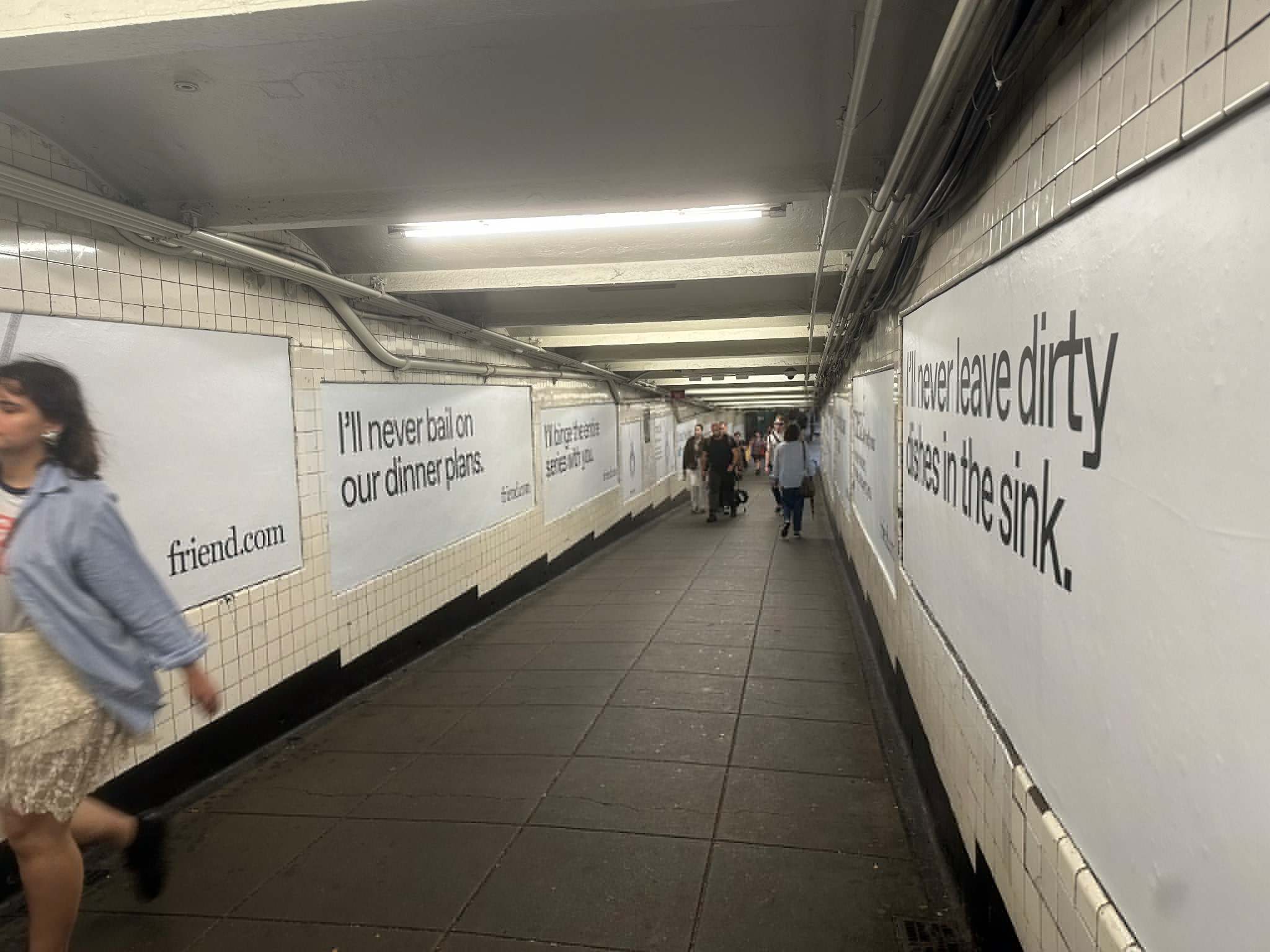
“I’ll never bail on your dinner plans”, “I’ll never leave dirty dishes in the sink”, “I’ll binge the entire series with you”.
Who exactly are these ads talking to? People who lack the tolerance, and the skills, to deal with the small conflicts that come with friendship. Or people with no friends to share TV with in the first place.
And Friend is it’s cashing in on those people. Here are the reactions:
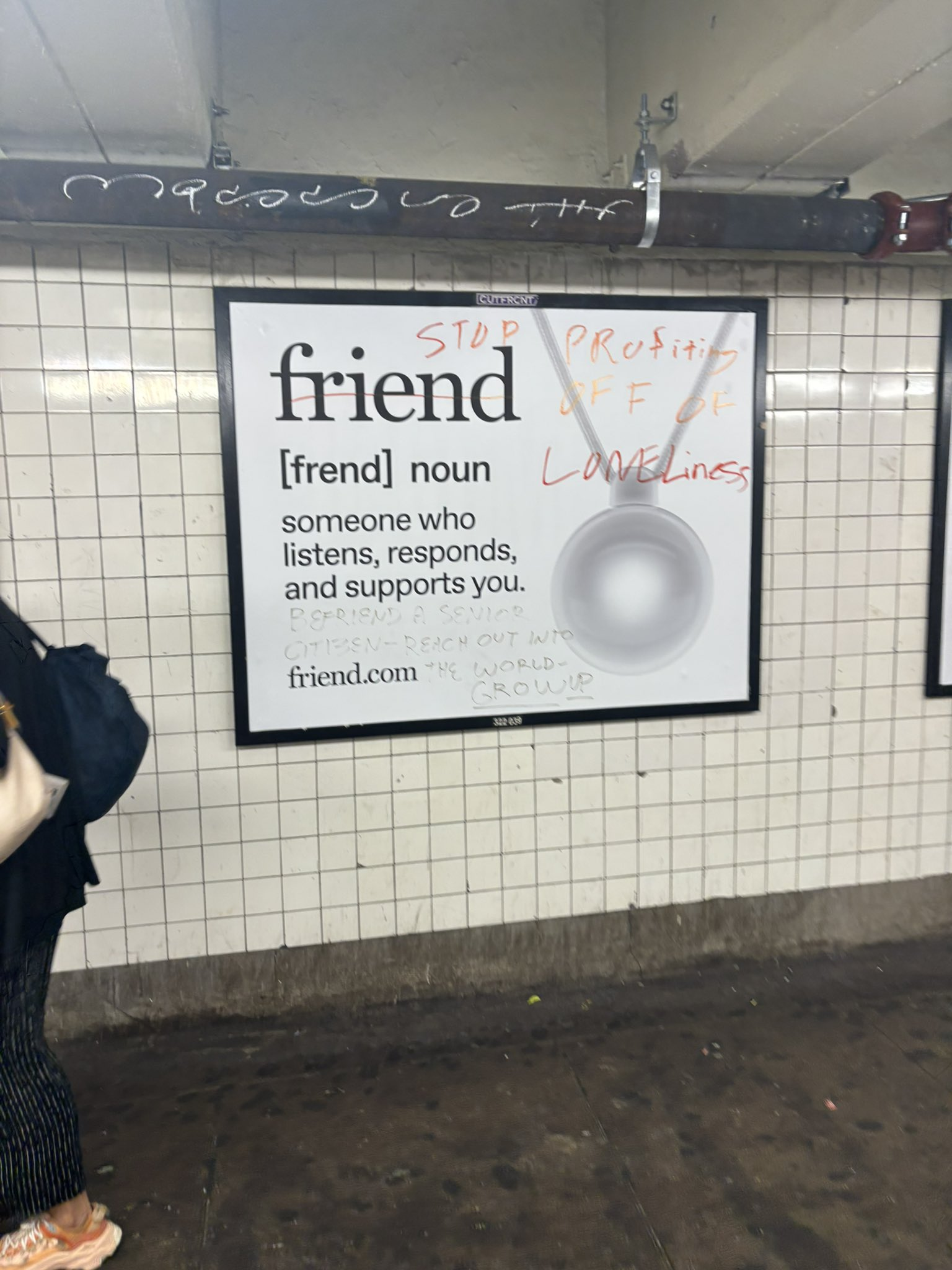

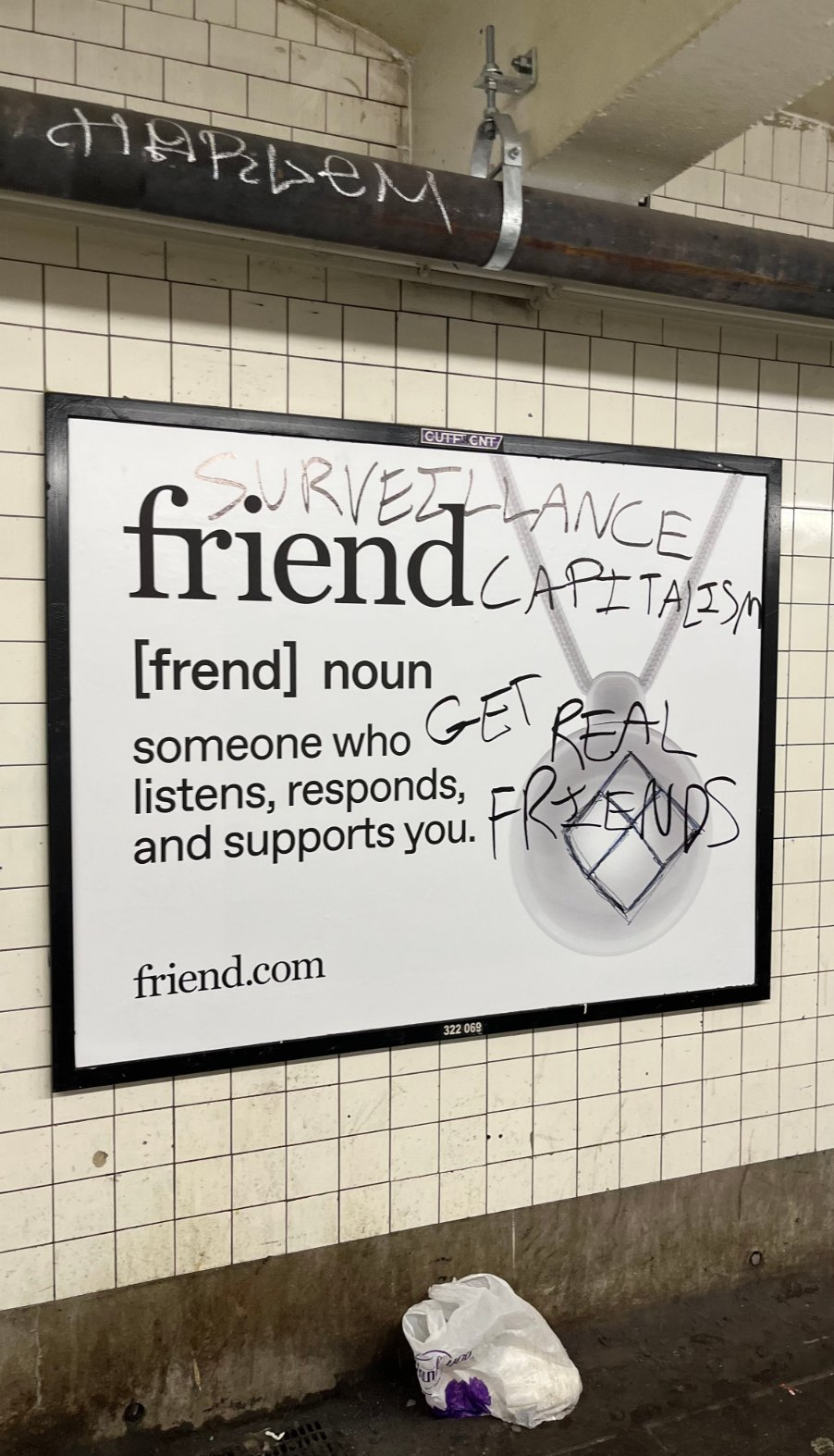
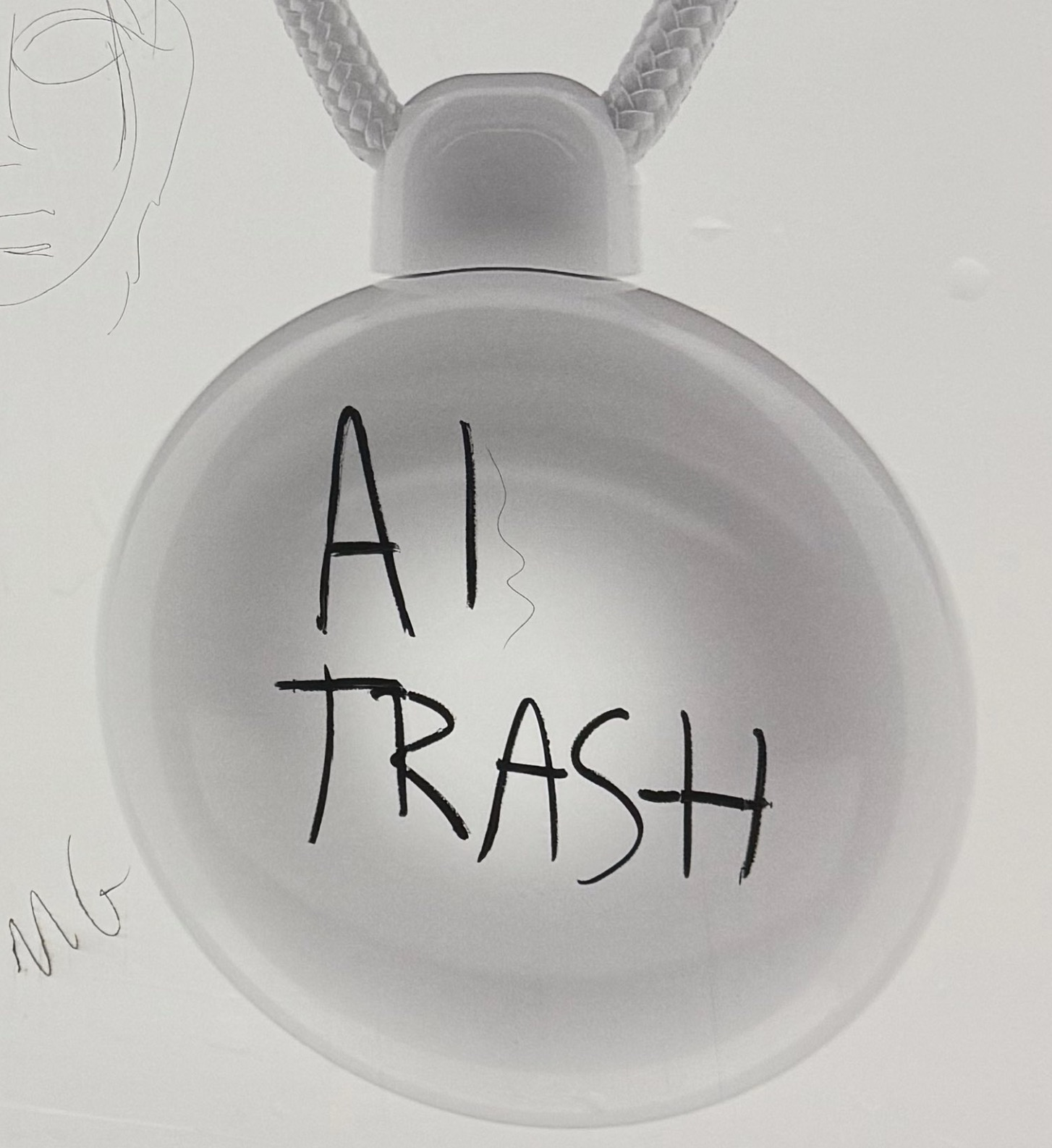
Unrelated but this is art:

The product
WIRED wrote a takedown of Friend, calling it bad on technical, social, and moral grounds. The gist:
- People hate being recorded without consent. Even the techiest crowd draws the line at casual surveillance.
- The AI has low EQ.
- The UX has rough edges.
But WIRED missed a problem: wearing Friend means telling the world you’re lonely.
Devices signal identity. For example, a smartwatch (in a few cases) might signal health problem, but it always shows you’re trying (”I care about fitness. I’m improving.”). That’s aspirational.
Friend says the opposite: “I’m lonely, and I’ve stopped trying”. Why whisper to a soulless pendant instead of putting effort into a human conversation?
The founder’s responses to the hate
Being hated is the point. This is how Avi Schiffmann, Friend’s founder, responded:
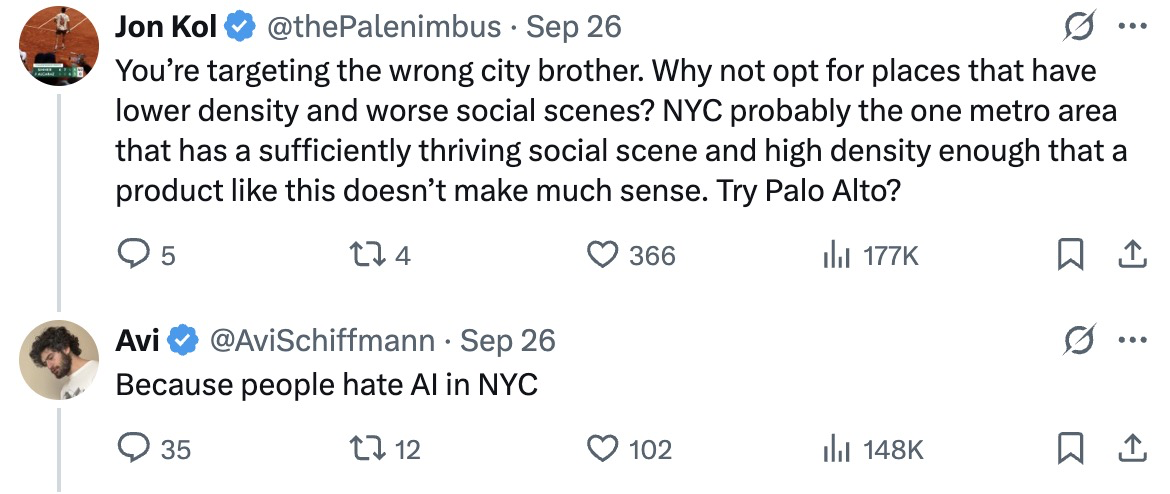
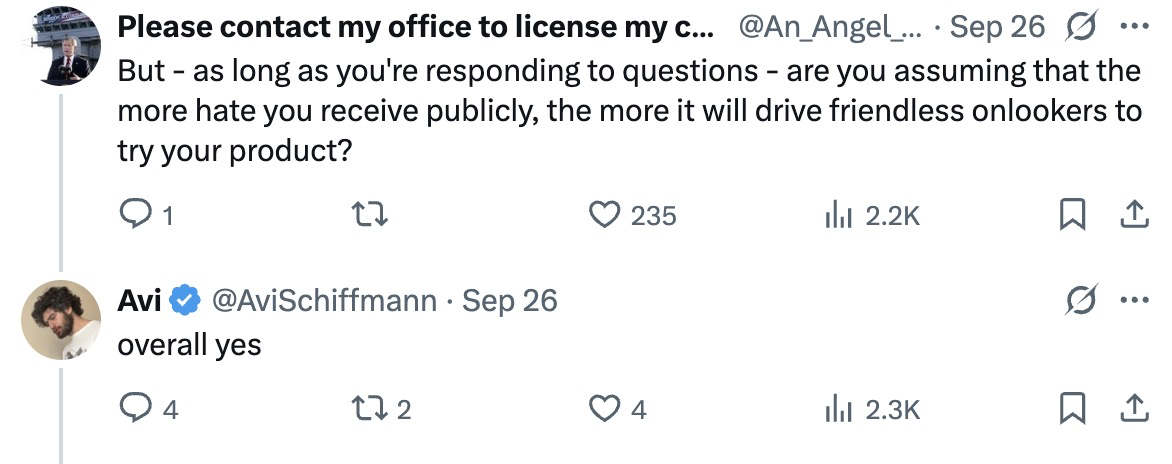
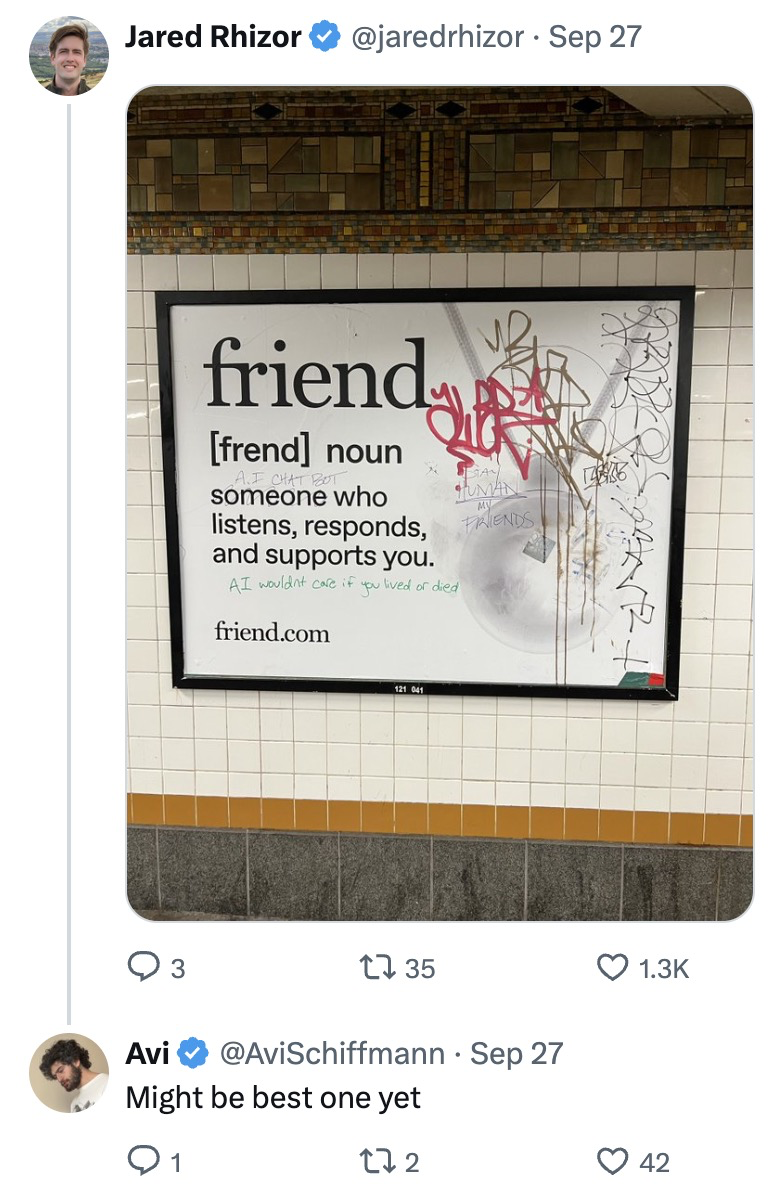
The guy’s also chasing attention at all cost:
- He poured $1M into the NYC ad campaign
- He claims 300 more billboards are coming nationwide
- He dropped $1.8M on the domain friend.com, out of a total $1.9M raised
And the “shameless” posture isn’t new. It echoes Cluely, whose manifesto literally declares: “to cheat on everything”.
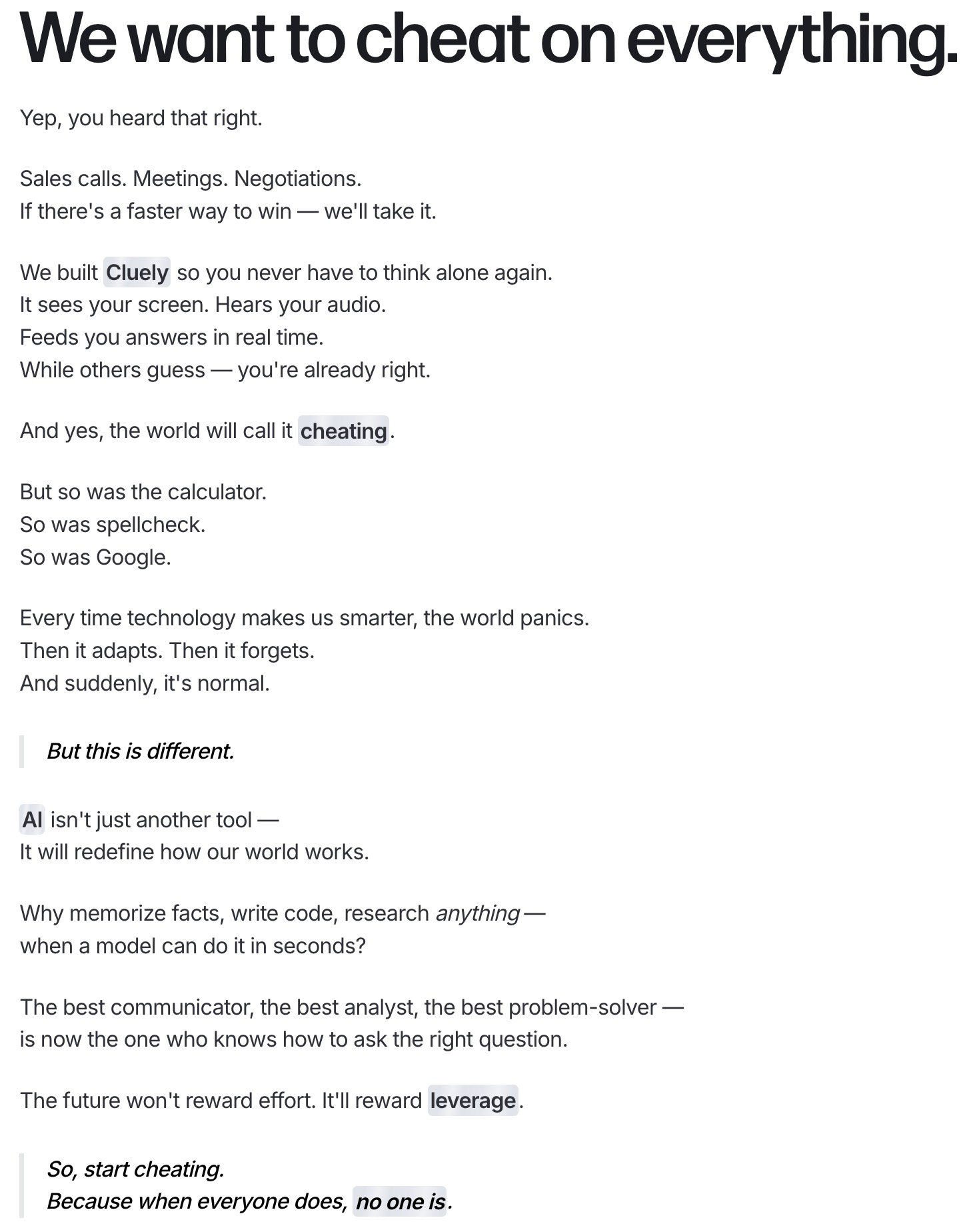
Their marketing flaunts a decadent lifestyle, bragging about burning VC cash to fund it.
Roy Lee, Cluely’s founder, and Avi shares the same shameless, amoral vibe. And they be like “Yes, we’re like this. What are you going to do about it?”
And yet, beneath the noise, usage is tiny. No surprises, as consumer hardware is brutal. Rabbit and Humane both drew massive hype before collapsing. Friend is not different. Few people are actually using it, and those who do don’t sound very thrilled.
But I guess attention is the new meta-game? A product on its own isn’t enough. Your distribution is tiny compared to incumbents, and they can crush you whenever they feel like it (e.g. Apple “sherlocks” apps every year). So attention becomes one of the only levers left, and a very powerful one with social media.
The founder
A quick profile of Avi Schiffmann:
…he built the COVID-19 tracking website that tens of millions used per day during the height of the pandemic, winning a Webby Award presented by Anthony Fauci himself. He got into Harvard, (he says he had a GPA of 1.6 in high school, but his Harvard interviewer was more addicted to his website than Facebook), and went for one semester until the Ukraine-Russia war began. Then, he dropped out to make another website to help house Ukrainian refugees, claiming to find housing for 100,000 Ukranians. He’s made similar websites to aid victims of the 2023 earthquakes in Turkey, and for people to find protests to support Black Lives Matter.
— ‘Friend’ creator Avi Schiffmann says AI necklace is like talking to God | Fortune
That profile reads altruist, not opportunist. So why build a product that is widely despised? Maybe he’s changed. Maybe he’s pragmatic now, chasing money and influence as the means for something better later. Or maybe the story in the past was never as clean as people believed.