Valorant is a popular first-person shooter (FPS) developed by Riot Games. If you’re not familiar with the game, watching a few minutes of this video will give you the general idea.
Intermittent reinforcement is a concept in psychology, involving providing reward or punishment for a behavior irregularly and unpredictably, rather than every time the behavior occurs. This phenomenon is present in various forms of addictive activities. Gambling is an obvious example, where participants don’t receive rewards on a fixed interval, but rather experience wins and losses in an unpredictable manner.
Intermittent reinforcement is not uncommon in video games. However, looking at the design of Valorant, I found the developers to have been applying the concept to a greater extent. Let’s see how they do it.
Low time-to-kill and random spray pattern
Time-to-kill (TTK) in gaming indicates the average time it takes to eliminate an opponent. The following videos illustrates different levels of TTK:
Valorant’s TTK ranks pretty low on the chart, allowing players to be eliminated quickly, oftentimes in a mere blink of an eye.
Another factor to consider is the spray pattern. The concept refers to the trajectory that bullets follow when a gun is fired continuously without adjusting the aim. Several games implement consistent and predictable spray patterns, such as the AK-47 in CS:GO — shooting at a wall with this gun reveals a pattern resembling an inverted number 7.
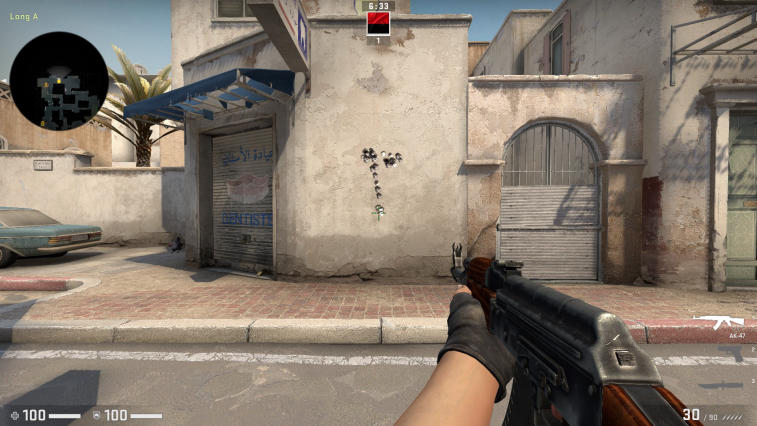
Valorant’s spray pattern is relatively unpredictable. A YouTube comment captured this randomness: “Valorant doesn’t reward spraying at all. The rifles in this game are designed to make sure that you shoot enemies in a 2-3 bullet burst, that is if you kill them. When the 4th bullet comes, all the bullets that will come right after are all going to spray randomly”.
So, why am I talking about these things? The combination of low TTK and random spray pattern makes kill and death in Valorant rely more on chance. The outcome is uncertain in 1-vs-1 situations, even with a significant skill gap. The video below showcases several instances where a lower-level player unexpectedly secures kills against a higher-level opponent.
While higher skill levels generally lead to a better kill/death ratio, predicting the winner in a particular 1-vs-1 scenario is challenging, as demonstrated in videos like the above (searching on YouTube with keywords such as “valorant platinum vs silver”, “radiant vs gold”, etc. will show similar examples). Even high-level players who’ve been playing for a long time complain about the randomness (source #1, source #2).
Due to these design choices, incredibly lucky moments are not rare. It’s not an exaggeration to say that sometimes, the game feels like a slot machine.
Wallbanging
Wallbanging is the act of shooting at a character through a wall without direct visibility. In Valorant, walls are “thinner” than those found in other popular FPS games. Wallbanging resembles a calculated gamble, and the thinner walls encourage players to make those guesses more frequently.
Map design
Because death can happen in an instant, players have to constantly anticipate potential locations of the enemies. This challenge is further intensified by the map design.
Before getting into the details, let’s me give you a little bit of context (skip this if you already know the game, as well as what “line of sight” and “corner” mean):
Valorant rule: A typical match involves two teams — the attackers and the defenders. The attackers have a bomb-like device known as the Spike, with the objective of delivering and activating it at designated locations. The attacking team secures victory either by successfully detonating the Spike or eliminating the defending team before time expires. Conversely, the defending team wins if they successfully prevent the attackers from achieving these objectives.
Line of sight: a concept in FPS games, representing what the player can see in front of them.
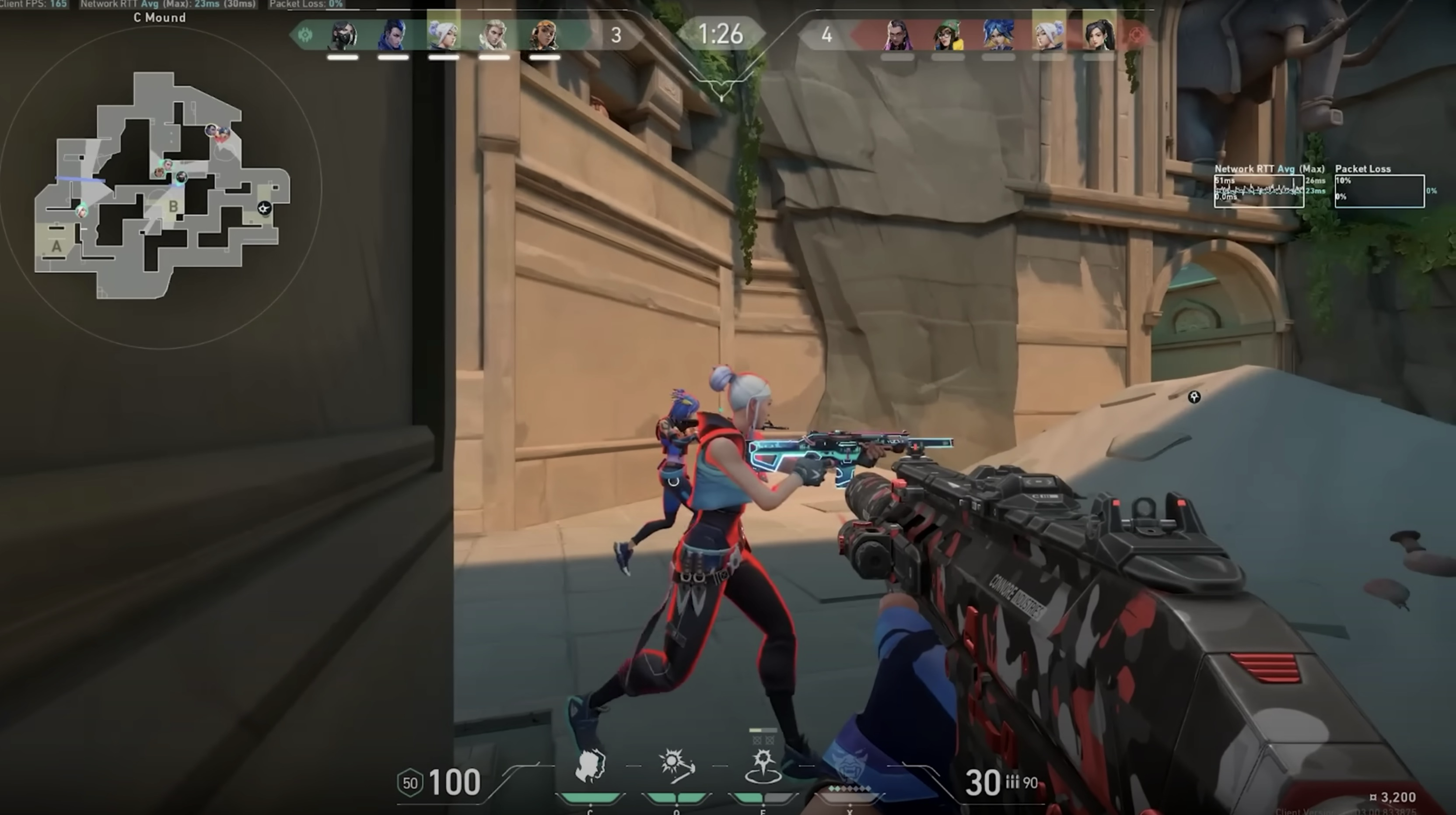
Corners: as the term suggests, “corner” just means… corner. However, this extends beyond wall corners; even a crate adjacent to a wall can create one or two corners. In Valorant, and in FPS games generally, players often talk about “checking corners”, which means inspecting potential locations where an enemy may hide. As an illustration for the term, the image below shows the enemy team not checking a corner, leaving the player unnoticed.
Let’s take a look at a Valorant map named “Haven” to understand how the developers design line of sight and corners.
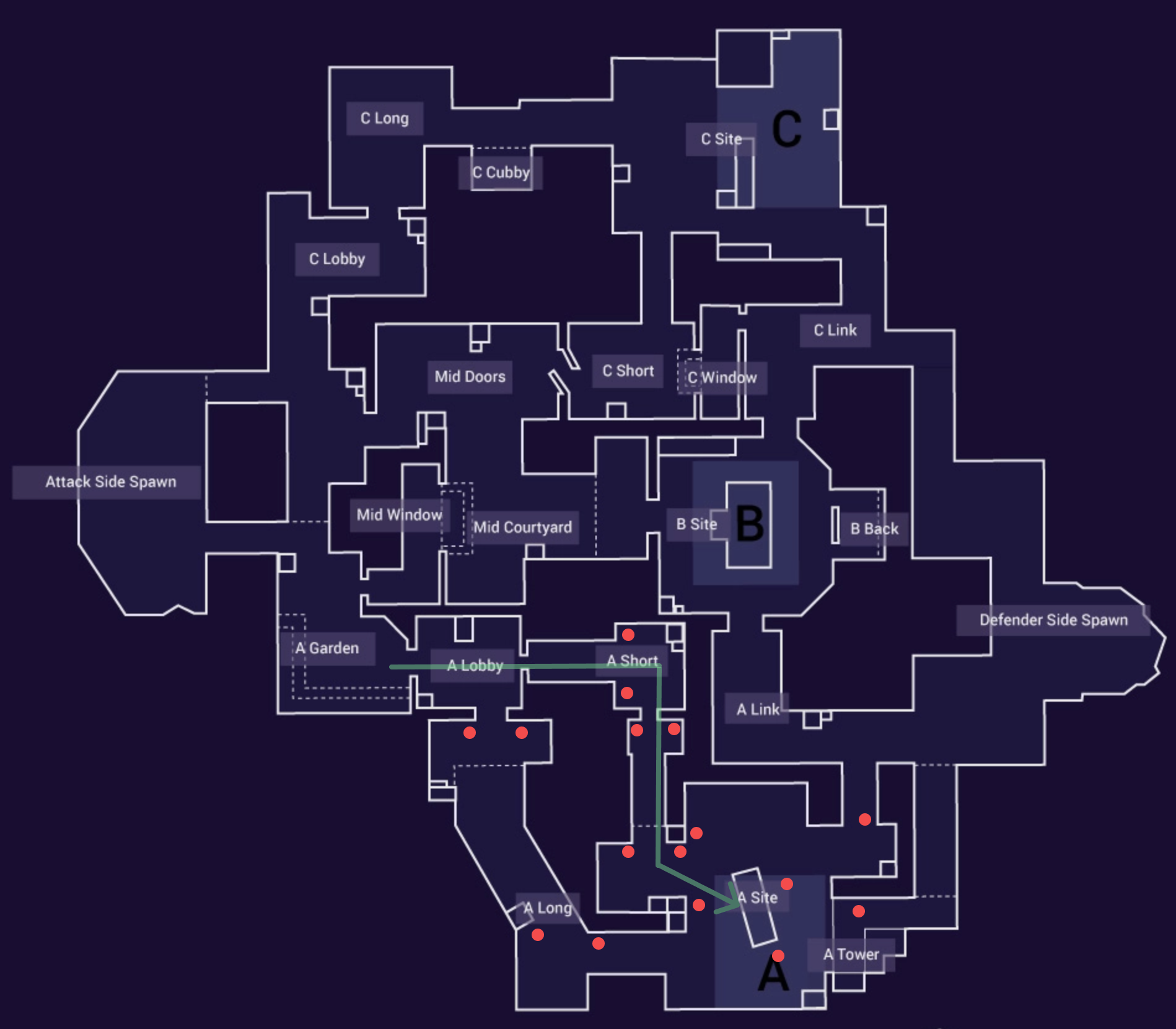
I’ve outlined a typical path that attackers would follow as they advance towards the bomb site (marked A, the other two bomb sites are marked B and C). The red dots represent the potential hiding spots for enemies. Given the prevalence of corners in Valorant, there are quite a lot of these hiding spots. Additionally, the design of pathways, walls, and objects (e.g. boxes and crates) significantly limits a player’s line of sight.
This deliberate layout creates an environment in which the enemies could be lurking anywhere. Combined with a low TTK, unless they want to die, players are compelled to make a series of micro-predictions as they progress through the map. However, rewards and punishments in this game are very variable.
Side note
Valorant, like many multiplayer games, is a mixed bag when it comes to teammates. Sometimes you get to play with skilled and fun people. There is a great team synergy, and players participate in friendly and enjoyable trash talk. On the flip side, however, eventually you meet trolls who deliberately sabotage the game; or people with anger issues insulting teammates over minor mistakes.
I have a love-hate relationship with this game. There are enjoyable matches with cool and cooperative teammates are exhilarating, and there are encounters with toxic players which can be demoralizing. Despite the occasional frustration, I keep playing with the hope that the next match will be great.
Coincidentally, intermittent reinforcement plays a critical role in preventing the victims of abusive relationships from leaving. While I’m not sure this “mixed bag of feelings” is intentionally crafted by the developers, they probably are aware of this effect.