Chess.com displays a country flag next to every username. It’s a tiny feature, but it’s doing quite a lot of work.
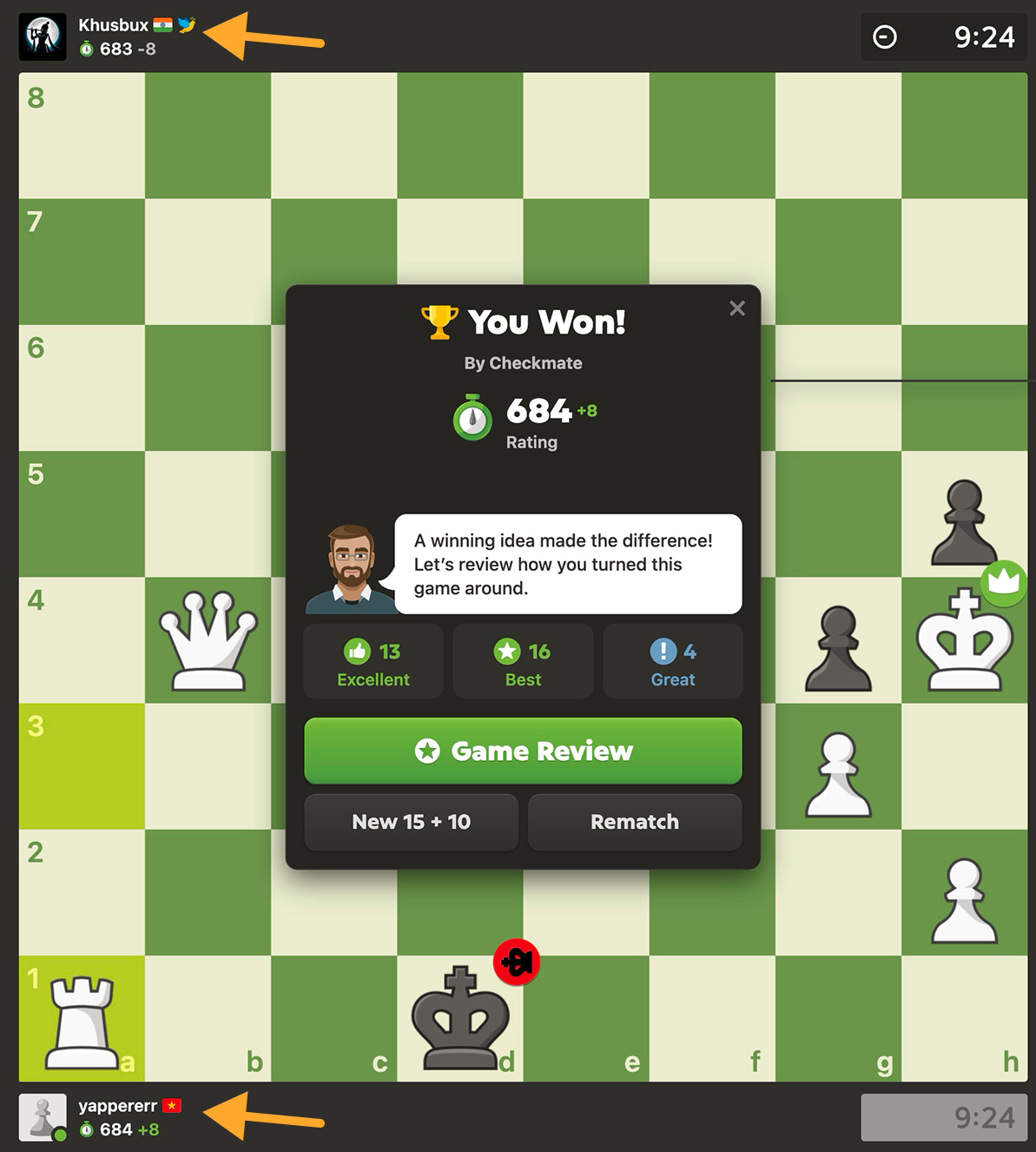
The flags have been there nearly from day one. The founder’s stated reason was to give the site “a greater sense of community”. Let’s see how that manifests on the site.
What the flag does
It makes the site feel populated by real people
You get a sense of “I’m playing with people all over the world”.
It creates rapport with compatriots
See your own flag across the board and you feel some kind of rapport. You might even say “hello” to them in your native language.
It probably moderates toxicity
Knowing where a person comes from makes them feel more like a human, instead of merely a username.
However, I think in a very few cases, it can create toxicity: stereotyping (“Players from X always cheat”), or hostility between countries with deep political tensions.
It seeds community structures
The flag feeds into the rest of the community: friends from other countries feel novel, country clubs give people a community they can join with zero explanation needed.
The cost to implement the flag
For engineering, it’s cheap to implement. In return, the players want to comeback in a way they don’t with another popular site: Lichess (the site has flags but it’s not enabled by default, which means most users won’t show their flags).
However, a person’s country is a political landmine. As reported by Rest of World, following the Russian invasion of Ukraine, “Russian players faced exclusion from online tournaments and were shut out by other teams”. Or in other instances, “[chess.com] has previously sparked anger for offering Palestinian, Macedonian, and Catalonian flags”.
Chess.com removed the Russian flag from the country’s players. The backlash was immediate. One Russian team admin called it “the destruction of a certain part of the user’s self-identification”.
That’s the evidence the feature works. A cosmetic icon doesn’t get grieved. The flag has become part of how players see themselves.
**
The flag discloses almost nothing about the user, but it’s enough to humanize an opponent, create rapports between strangers, and seed community structures.